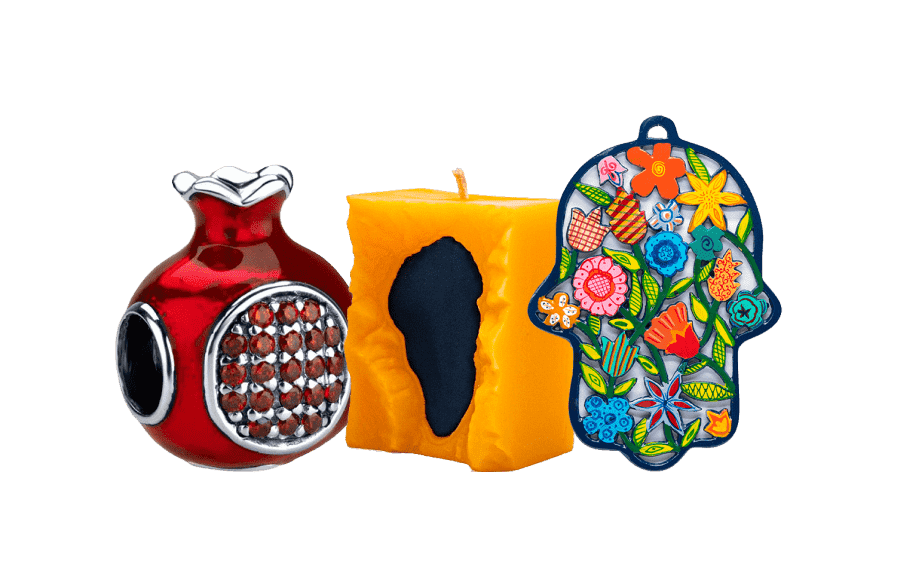


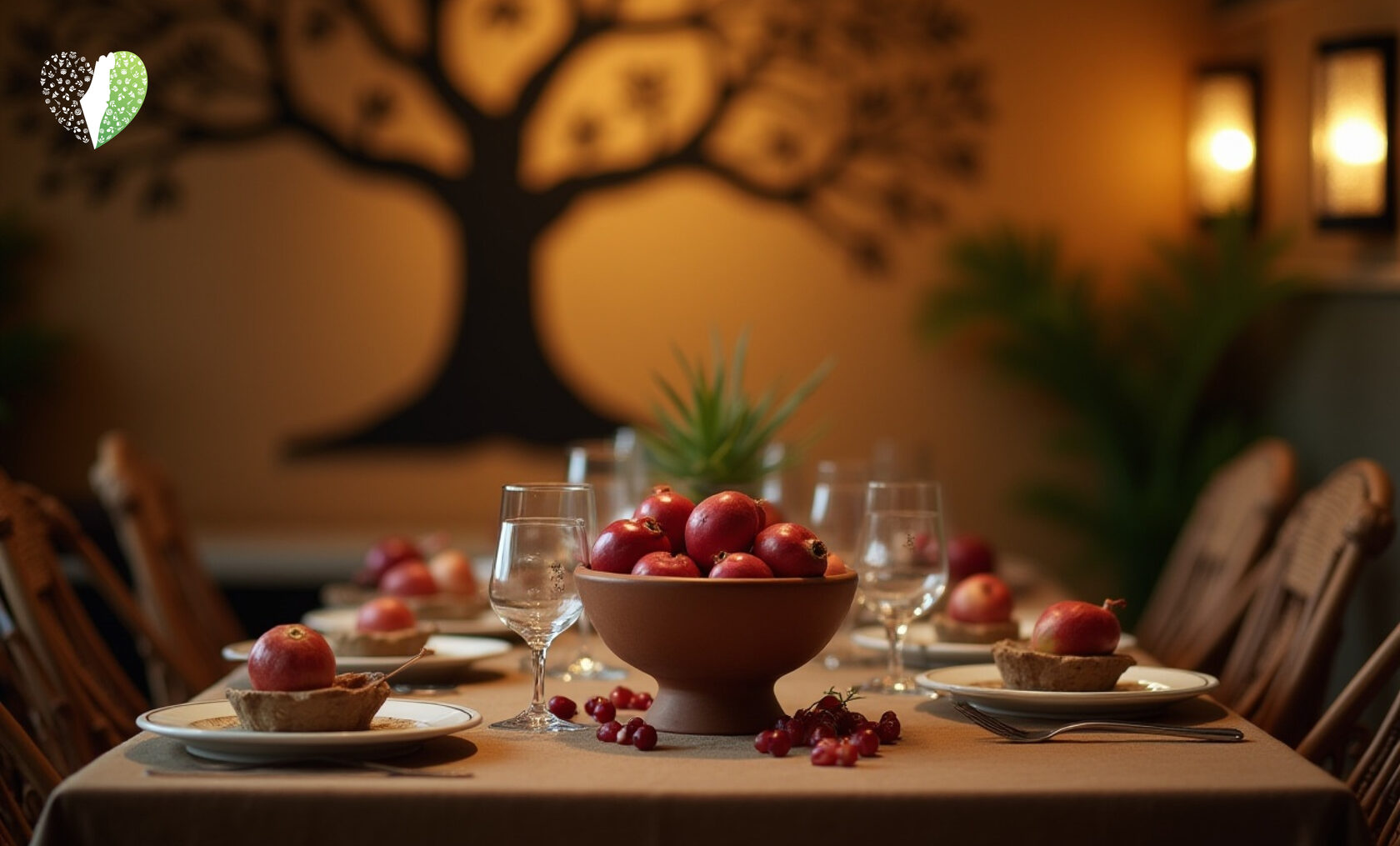
On a quiet evening, the table is laid almost without thinking: a familiar bowl for olives, a small dish for salt, candles waiting to be lit. You’ve done this a hundred times. But then your eye lingers—on a tiny pomegranate painted inside the bowl, on the branching pattern of a metal ornament above the doorway, on the curve of Hebrew letters along a candlestick. Suddenly the ordinary feels anchored. These aren’t just “things.” They’re symbols with memory, meaning, and a way of making time feel layered—today resting gently on yesterday.
Symbols do that. They turn rooms into places, routines into rituals, and objects into a language we can feel with our hands.
Symbols do that. They turn rooms into places, routines into rituals, and objects into a language we can feel with our hands.
The Language of Symbols
Sacred symbols say more than we can fit in a paragraph. They carry stories across generations, and every home translates them a little differently. Three appear again and again in Jewish life and Israeli craft: the pomegranate, the Tree of Life, and Hebrew letters themselves. Each symbol holds a universe—historical echoes, spiritual teachings, and everyday wisdom for how to live.

The Pomegranate: Abundance You Can Hold
The pomegranate appears in Scripture and traditional art as an emblem of fullness and blessing. It’s been said—poetically, not mathematically—that a pomegranate holds 613 seeds, echoing the commandments: the idea is not arithmetic but attitude. A life attentive to blessing is a life that notices how many seeds—how many small acts—add up to something abundant.
Historically, pomegranates adorned the garments of the High Priest and the edges of ancient design. In the home, a pomegranate motif often lives where we share food and gratitude—on a serving dish, a spice box, a small tray that passes from hand to hand. Its roundness suggests wholeness; its crown reminds us that dignity can be quiet. When you place fruit, nuts, or spices in a pomegranate bowl, you enact a small theology: goodness isn’t rare; it’s gathered, seed by seed, into daily life.
Historically, pomegranates adorned the garments of the High Priest and the edges of ancient design. In the home, a pomegranate motif often lives where we share food and gratitude—on a serving dish, a spice box, a small tray that passes from hand to hand. Its roundness suggests wholeness; its crown reminds us that dignity can be quiet. When you place fruit, nuts, or spices in a pomegranate bowl, you enact a small theology: goodness isn’t rare; it’s gathered, seed by seed, into daily life.
How it reads in a room: generous, festive, thankful.
What it invites: blessing before meals, noticing sweetness, offering seconds.
The Tree of Life: Roots That Reach Both Ways
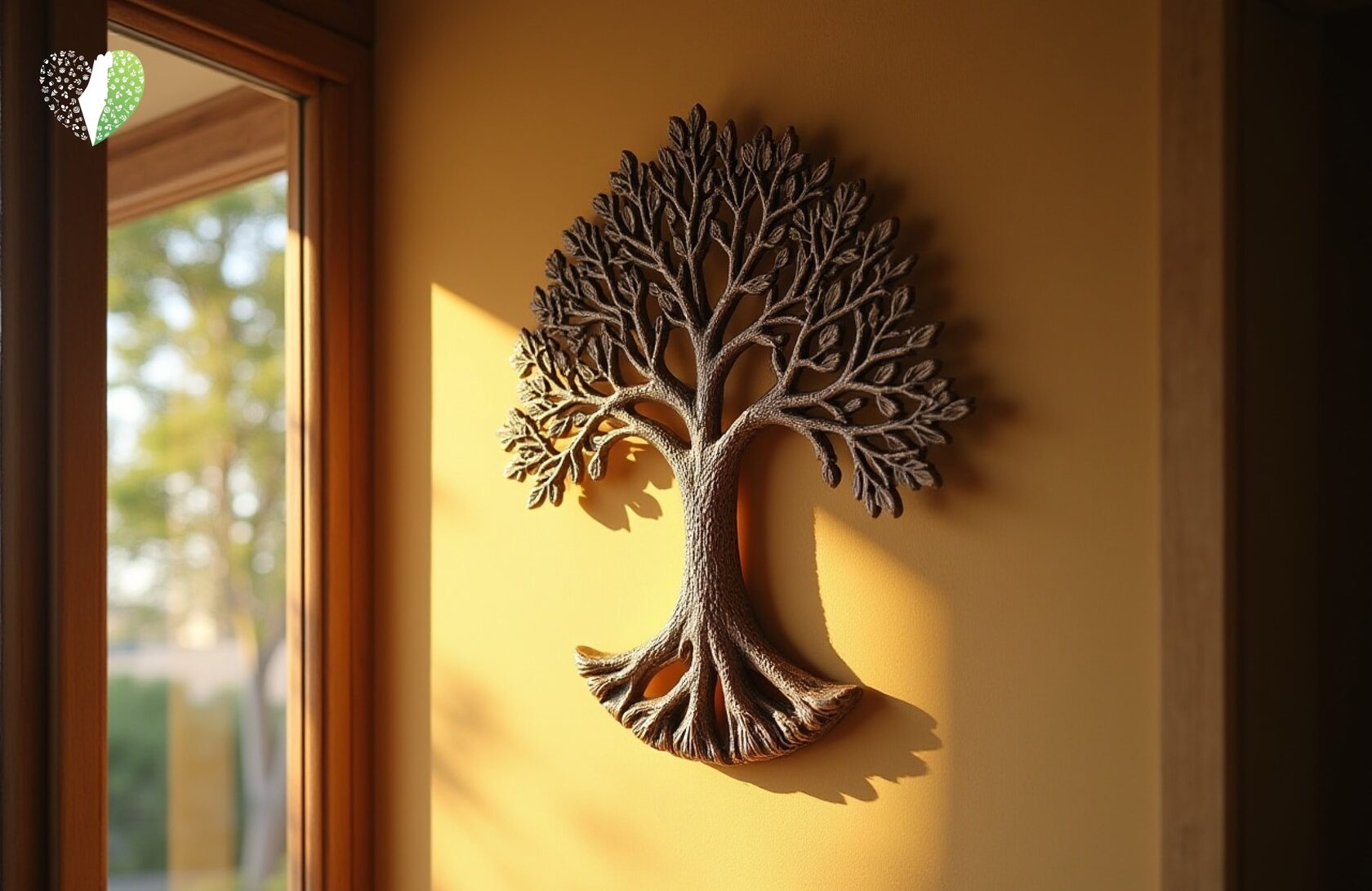
“Tree of Life” (Etz Chayim) is a phrase from Proverbs, but it’s also a living metaphor. A tree is rooted and aspiring at once—drawing strength from the past while opening its branches to light. Artists render it as twisting trunks and spiraling branches; some emphasize deep roots, others radiant leaves. The message is stable: we are connected—to kin, to place, to a story larger than ourselves.
In mystical thought, the Tree of Life can map spiritual pathways; in family life, it becomes an emblem of continuity and care: the way we hold each other through seasons. Hung near an entryway or above a table, it’s an everyday reminder that growth takes time and nourishment—and that strength is often quiet.
In mystical thought, the Tree of Life can map spiritual pathways; in family life, it becomes an emblem of continuity and care: the way we hold each other through seasons. Hung near an entryway or above a table, it’s an everyday reminder that growth takes time and nourishment—and that strength is often quiet.
How it reads in a room: steady, hopeful, intergenerational.
What it invites: patience, rootedness, tending relationships.
Hebrew Letters: The Shape of Prayer and Presence
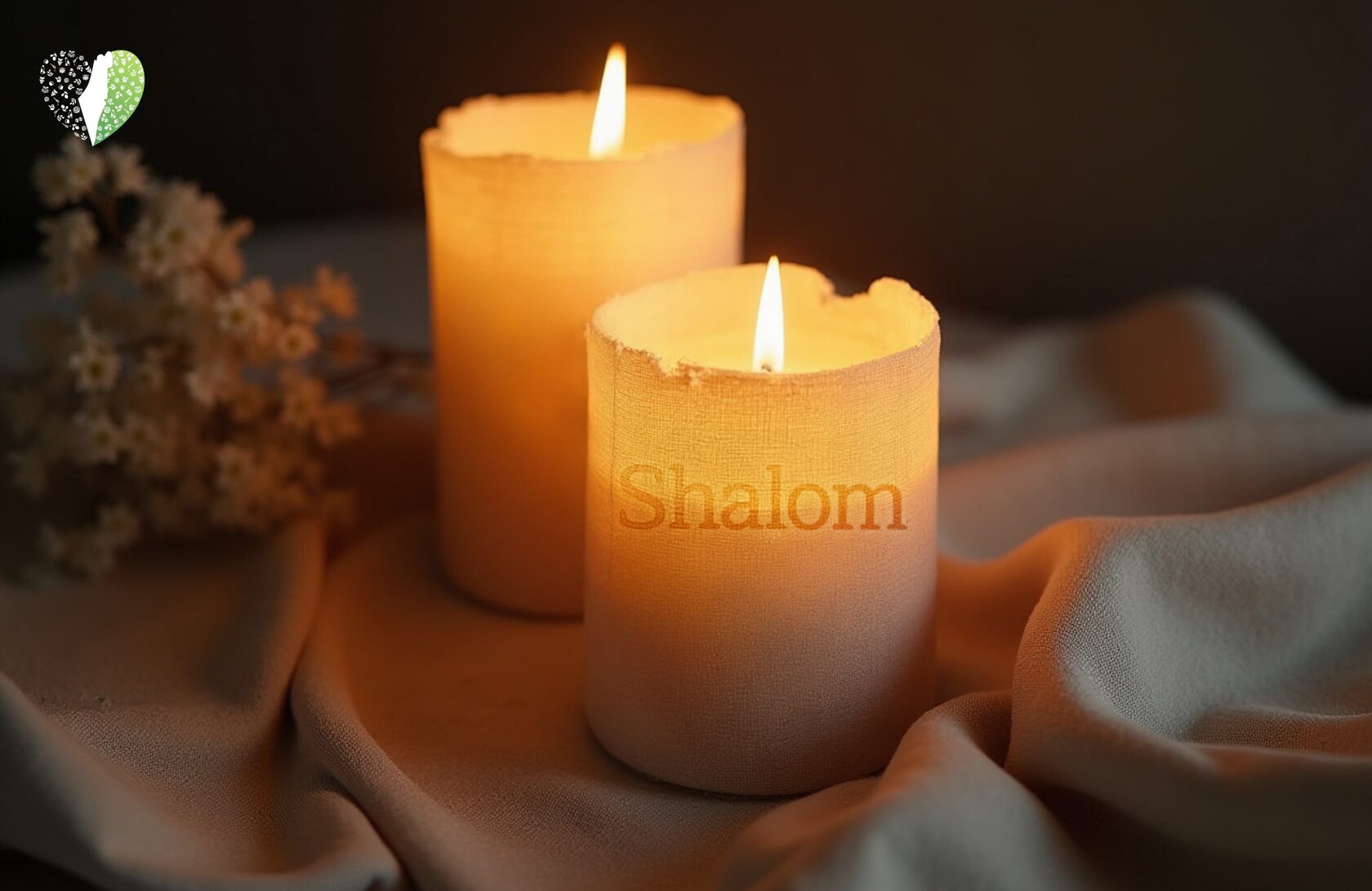
Hebrew letters are more than a script—they’re architecture for meaning. The alphabet is used to write blessings, verses, single words like Shalom (peace) or Bracha (blessing), and sometimes just a single letter—Shin, for example—standing for one of the Divine Names. In the hands of a calligrapher or engraver, letters become a visual devotion: form serving spirit.
There’s a long lineage here, from scribes who meticulously write Torah scrolls to modern artists who shape letters in wood, glass, or metal. Each stroke is intentional; each serif remembers discipline and care. Placed on candle holders, tiles, or wall art, Hebrew letters sanctify attention: every glance becomes a small prayer, every Friday evening a page turned with light.
There’s a long lineage here, from scribes who meticulously write Torah scrolls to modern artists who shape letters in wood, glass, or metal. Each stroke is intentional; each serif remembers discipline and care. Placed on candle holders, tiles, or wall art, Hebrew letters sanctify attention: every glance becomes a small prayer, every Friday evening a page turned with light.
How it reads in a room: contemplative, grounded, articulate.
What it invites: presence, blessing, a moment to breathe.
From the Workshop to the Living Room
Before these symbols grace a shelf or a table, they live in the hands of someone who coaxes them into being. Knowing even a little about that process changes the way we hold them.
Clay and Fire: The Ceramicist’s Quiet Alchemy
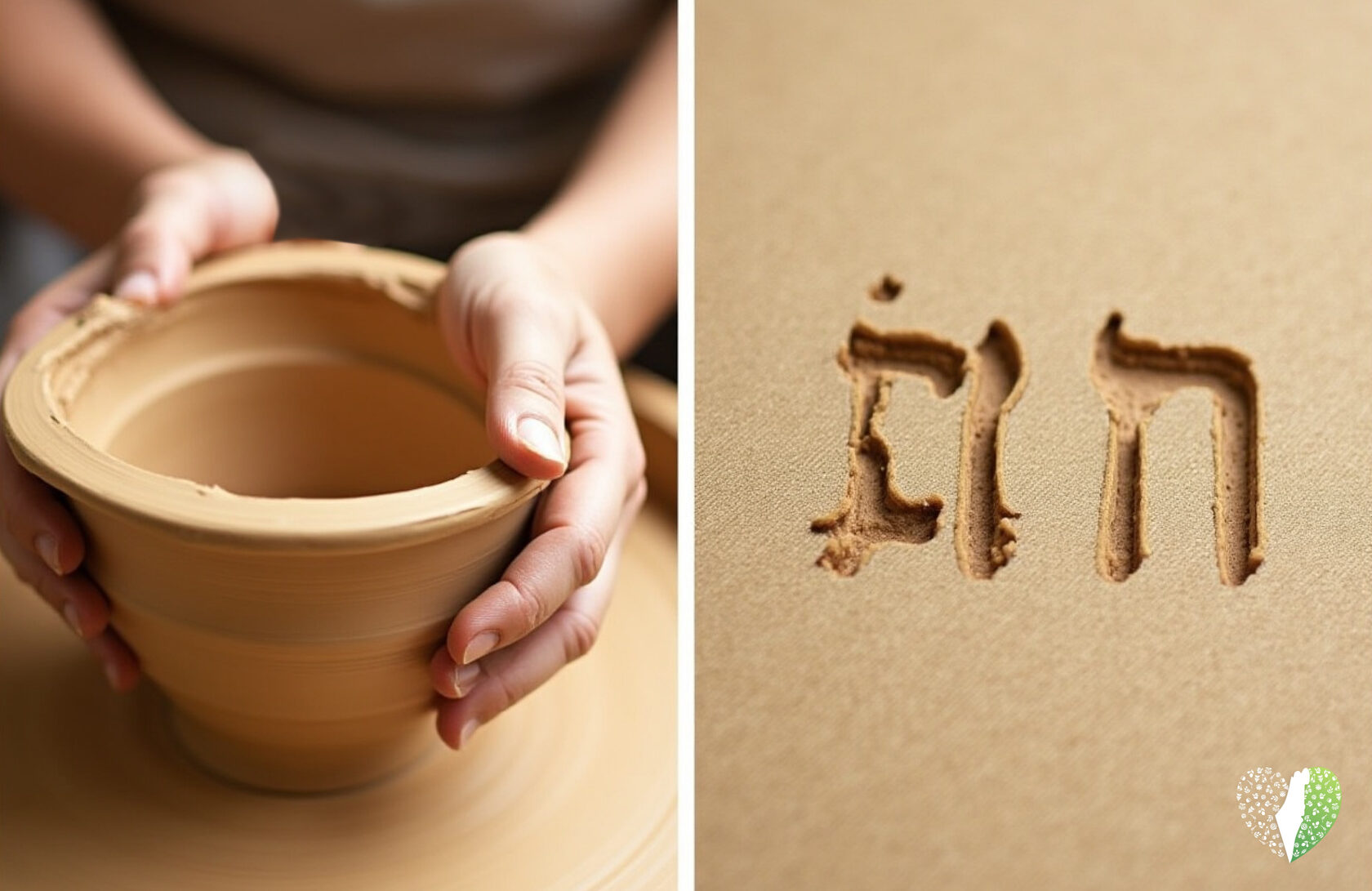
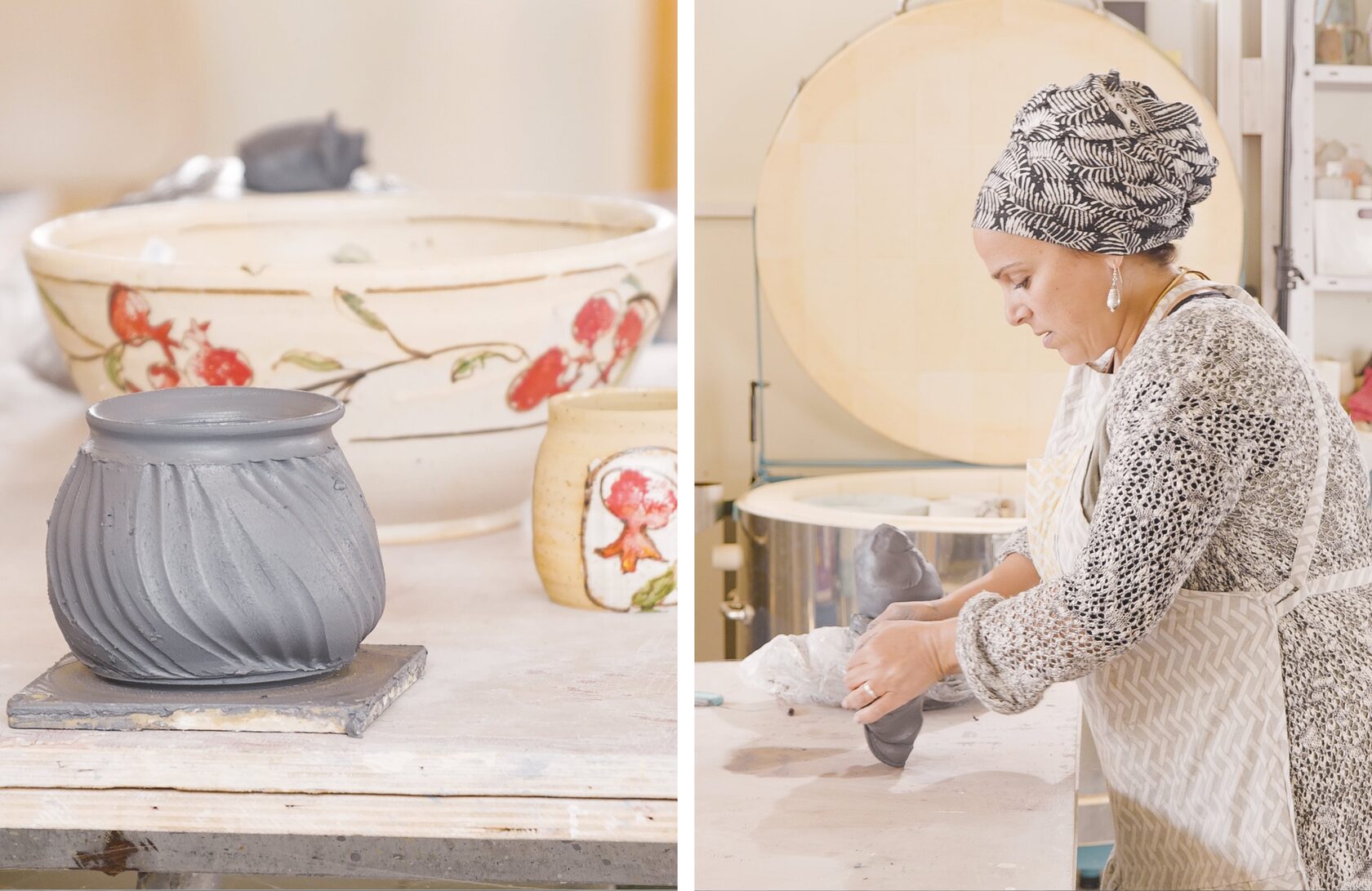
In a Jerusalem studio, a ceramicist wets her hands, kneads clay to wake its fibers, and centers it on the wheel. A bowl begins not as a shape but as a listening—the clay tells you when it’s ready. The pomegranate emerges as a relief or a painted motif, sometimes outlined in sgraffito, sometimes filled with a ruby glaze.
There are two firings: a bisque to harden, a glaze fire to seal color and sheen. Tiny variations in temperature and placement make every piece a singular event. You don’t just receive a dish—you receive the memory of the kiln’s heat and the potter’s steady breath.
There are two firings: a bisque to harden, a glaze fire to seal color and sheen. Tiny variations in temperature and placement make every piece a singular event. You don’t just receive a dish—you receive the memory of the kiln’s heat and the potter’s steady breath.
At home: the bowl holds olives on weekdays, pomegranate seeds on holidays, and the everyday habit of passing goodness around.
Metal and Light: Shaping a Tree That Catches Sun
In Tzfat, a metalworker traces a tree pattern onto brass or bronze, then cuts, hammers, and files until branches feel alive. Sometimes the piece is cast; sometimes it’s cut and formed by hand; either way, the artisan works for balance—between weight and air, root and reach. A patina is applied so that light pools in recesses and glides across leaves. The finished Tree of Life hangs where it can meet the day, collecting morning and evening light like a quiet blessing.
At home: it becomes a landmark for arrivals and goodbyes, a silent host that says, “You are part of something living.”
Thread and Time: Letters You Can Touch
In the Galilee, a textile artist stretches linen taut in a frame. She sketches the word Shalom lightly, then embroiders it in chain and satin stitches, maybe with a border of tiny pomegranates. Threads carry texture language can’t: the raised letter invites fingertips to trace it, turning a glance into contact. It’s slow work, and that’s the point—time becomes part of the object. When a blessing is stitched rather than printed, you feel the hours within it.
At home: a challah cover gathers Fridays together; a small wall hanging turns a hallway niche into a place to pause.
It’s in these hands, this time, this devotion, that the objects gain their soul. And if you want these living traditions to reach you—not once, but again and again—our membership makes it possible. Members receive a surprise artisan box every month, always with lifetime free shipping, plus digital heritage gifts and private access to an exclusive shop of Israeli creations. It’s a way to let these stories keep arriving quietly, weaving themselves into your life.
Wood, Glass, and Stone — The Material Remembers
Olive wood, warm to the touch, carved into blessings. Glass etched so candlelight turns words into dancing shadows. Clay pressed with prayers, stone carrying the cool breath of the earth.
The materials speak, and artisans listen—so that each finished piece feels honest to its origin.
Bringing such work into your home is not just a gesture; it’s a relationship. Between you and the maker. Between your table and their craft. Between your life and the heritage that shaped theirs.
And with a membership, that relationship deepens. Month after month, a piece of this living story arrives at your door—alongside gifts of tradition, connection, and access to a world of artisan treasures rarely seen beyond Israel’s borders.
The materials speak, and artisans listen—so that each finished piece feels honest to its origin.
Bringing such work into your home is not just a gesture; it’s a relationship. Between you and the maker. Between your table and their craft. Between your life and the heritage that shaped theirs.
And with a membership, that relationship deepens. Month after month, a piece of this living story arrives at your door—alongside gifts of tradition, connection, and access to a world of artisan treasures rarely seen beyond Israel’s borders.
Why These Objects Matter
Wood, Glass, and Stone: The Material Remembers
Some artisans carve Hebrew letters into olive wood, letting the grain guide each curve. Others etch glass so that candlelight turns letters into shadows and glow. Stone workers press blessings into local clay or limestone; when you touch them, the material answers—the coolness of stone, the warmth of wood, the weight of glass. Materials speak, and artisans learn to listen so that symbols feel honest, not forced.
At home: you start to notice how the object changes with the day—how morning light finds the edges, how evening softens them.

Bringing the Story Home
You don’t need a grand plan to welcome sacred symbols into your everyday life. A pomegranate bowl near the door to greet you with abundance. A Tree of Life above the table, steady through seasons. Candle holders etched with Shalom for quiet Friday evenings.
Over time, these objects stop being décor. They become companions—witnesses to your mornings, your gatherings, your pauses. And with the membership, they’ll keep finding their way to you, one story-filled package at a time.
Over time, these objects stop being décor. They become companions—witnesses to your mornings, your gatherings, your pauses. And with the membership, they’ll keep finding their way to you, one story-filled package at a time.